
Tissue Culture Teak Farming
- Home
- Tissue Culture Teak Farming
Tissue Culture Teak Farming
Teak (Tectona grandis) is one of the most important hardwood timber trees of India and is distributed naturally in the peninsular region below 24oN latitude.Teak forests are found in Madhya Pradesh, Maharashtra, Tamil Nadu,
Karnataka, Kerala, Uttar Pradesh,Punjab (small extent), Gujarat, Orissa,
Rajasthan, Andhra Pradesh and Manipur. The species is indigenous to India
and the South-east Asian region.
Teak is a deciduous tree and can attain a height of more than 30m.Young
leaves are red in colour but become dark green at maturity.Inflorescence is
large,flowers are white in colour, producing sticky pollens for cross pollination, and become inflated at maturity.The flowers appear from June to September and fruits ripen from November to January. Teak sheds leaves from November
to January.


Importance of Teak
Teakwood is the best timber for the manufacture of door, window frames and
shutters, wagon and carriage, furniture, cabinets, ships, agricultural implements,decorative flooring and wall panelling due to its moderate weight, appropriate strength, dimensional stability and durability, easy workability and finishing qualities.In indigenous medicine, the leaves are employed, and their extract shows full suppression of My cobacterium tuberculosis. Flowers are said to be beneficial inthe treatment of disorders such as biliousness, bronchitis, and urine discharge. The leaves contain yellow and red dyes that are suitable for coloring silk, wool, and cotton. The bark is considered an astringent and can help with bronchitis.
Our Technology: Advanced Tissue Culture Plant Production
We specialize in the production of high-quality tissue culture plants through advanced laboratory techniques. The process begins in our state-of-the-art lab, where plants are carefully developed under controlled, sterile conditions to ensure uniformity, disease resistance, and vigorous growth.
After successful development in the laboratory, the plants move to the pre-nursery stage, where they are acclimatized and gradually adapted to external conditions.
Following this, they are transferred to the nursery stage, where they are further nurtured to strengthen their growth before being transplanted into the field for large-scale plantation.
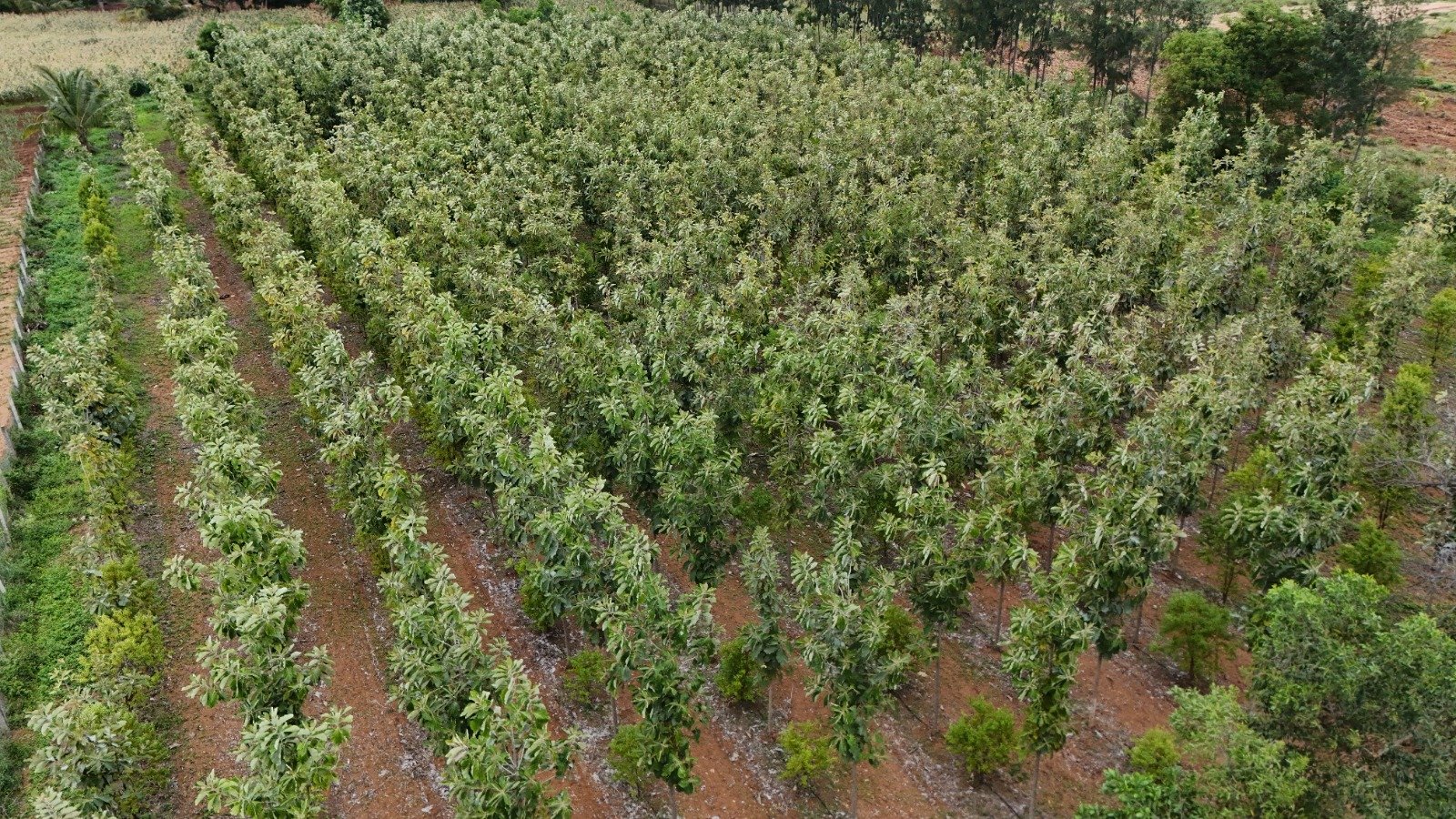
Traditionally, crops such as teak trees take about 12 to 15 years to reach full maturity under conventional farming practices. However, using our advanced tissue culture technology, the same plants mature within just 8 years. This significant reduction in the maturity period not only accelerates returns on investment but also ensures consistent plant quality, better yield, and higher resistance to pests and diseases.
Our tissue culture technology represents a major leap forward in modern agriculture, offering farmers faster crop cycles, improved profitability, and sustainable farming solutions

Trade :
The International Tropical Timber Organization:-
(ITTO) promotes sustainable management and conservation of tropical forests and the expansion and diversification of international trade in tropical timber from sustainably managed and legally harvested forests. It develops policy guidelines and norms to encourage sustainable forest management (SFM) and sustainable tropical timber industries and trade.
Marketing:-
Teakwood is very valued due to its quality timber, good woodworking, finishing capabilities, and most appealing grain, texture, and color, which makes it very precious and boosts its use for furniture, carving, cabinet making, door and window making. Decking, deck houses, rails, bulwarks, hatches, weather doors, and planking have all been made from it. Teak wood of Godavari valley in Andhra Pradesh is used for furniture and cabinet making for its ornamental figuring. Teak wood markets and depots are available in all teak growing states in India.
Role of Forest based industries in tree plantations:-
Forest-based companies were very profitable since the majority of them received raw materials at subsidized prices, resulting in non-sustainable usage of forest stocks. However, due to increased demand and harvesting limits in natural forests. Forest-based industries began plantations on private properties with the help of farmers, to whom they provide financial and technical assistance. Forest-based enterprises have also approached the government about leasing degraded forest lands for plantings in order to meet their raw material needs.
Soil:-
Deep, well-drained alluvial soils, a moderately moist, warm, tropical environment, and pH levels ranging from 6.5 to 7.5. Because teak is prone to soil deterioration, plantations should be planted on undulating and somewhat flat terrain, with slopes greater than 12o avoided.
Light:-
A high light intensity, between 75 and 100% of the full sunlight is required for better growth and development.
Drainage and irrigation:-
Teak is very sensitive to poor drainage, so irrigation should be applied during stress period to boost the growth.
Pre-plant operations:-
Land should be thoroughly cleaned and well prepared with bush clearing and burning to reduce the level of the fuel load within the site. Lining out and pitting should start well in advance before the onset of rains. In India, a spacing of 2 x 2m with an initial planting density of 2,500 tress/ha is practiced. Quality pits (25cm long by 25cm wide by 25 cm deep) will allow seedlings to establish a proper rooting system that ensures survival.Teak can also be raised along with agricultural crops at a spacing of 4m x 4m or 5m x 5m. For this 45 x 45 x 45 cm sizes pit should be filled with a mixture of FYM, Fertilizers, and soil.
Gap Filling:-
Should be done within the same rainy season, and during procurement of seedlings, an extra 20% should be reserved for this operation. If mortality is significant, then farmers should opt for replanting the field.
Weeding:-
Weeds and other species will have an adverse effect on their growth. Thus, weed control is a critical inter-cultural activity in teak plantations. Weed control can be accomplished by a combination of chemical and manual weeding procedures.
Pruning and Thinning:-
Pruning should be done during the active growing season. To protect trees from fires, all epicormic and branches should be moved 6 m inside while pruning, and any debris around the trees should be removed. To limit disease transmission,keep cuts clean.
Protection and management:-
Forest fire management should be planned, with a clear strategy for monitoring and suppression. In India about 300 species of insects have so far been reported to be associated with teak. Teak defoliator (Hyblaea puera and Eutectona machaeralis) cause extensive damage to young plantations. Root rot due to Polyporous zonalis is also common in the plantation. Pink disease fungus causes cankers and bark flaking. Powdery mildew caused by Olivea tectonae & Uncinula tectonae leads to premature defoliation. Fresh leaf extracts of Azadirachta indica were found to be most effective against teak skeletonizers.